By the time an Australian student is 15, they will have spent as many as 11,000 hours at school. School is more than a place for learning; it is also an important setting for young people to build relationships and develop a sense of belonging.
New research from the Black Dog Institute, discussed in The Conversation, highlights just how important connection can be, by examining which aspects of school life are linked to students’ mental wellbeing over time.
Researchers analysed data from more than 1,500 Year 8 students across 35 NSW high schools. They considered a range of factors, including school type, teacher-student ratios, attendance, staff perceptions of school culture and students’ sense of connectedness.
Of these factors, only school connectedness was linked to higher mental wellbeing two years later: students who felt more connected in Year 8 were more likely to report higher wellbeing in Year 10.
Connection and belonging matter
The findings add to a growing body of evidence pointing to the importance of relationships and belonging in school life.
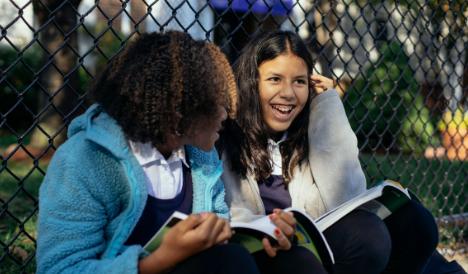
Feeling connected can mean different things for different students. It might be having a trusted teacher, feeling accepted by peers, knowing where to turn for support or simply feeling that you have a place within your school community.
These experiences can be particularly important during adolescence, when relationships and a sense of identity are continuing to develop.
Creating opportunities for students to connect
Belonging is not something that can be created through a single lesson or wellbeing initiative. It develops through everyday experiences: being listened to, having opportunities to participate, knowing where to turn for support and feeling that you can contribute.
This is where student-led approaches can play an important role.
The Conversation authors note that emerging evidence points to the value of whole-school approaches that involve students and staff. Examples include student voice opportunities, mentoring across year groups and activities that help students connect around shared interests. A recent meta-analysis also found that programs involving mentoring and problem-solving with others were more effective than programs focused on changing student behaviour alone.
The Peer Support Program brings senior and younger students together in structured small-group sessions, with trained Peer Leaders supporting younger students through activities and conversations focused on social and emotional skills.
These interactions give younger and older students opportunities to build relationships across year groups, practise communication and empathy, and experience both support and contribution.
Putting students at the centre
For Peer Leaders, there is another layer to this. Leadership becomes an opportunity to contribute to the school community, listen to younger students and model inclusive behaviours.
For younger students, having an older student who knows them, listens to them and helps them navigate school life can create another meaningful point of connection.
Through the Peer Support approach, students are encouraged to Invite, Listen, Notice and Include – simple actions that can help strengthen relationships and create a more connected school community.
Building connection into school culture
No single program can create belonging on its own. School culture is shaped by relationships between students and staff, peer interactions, inclusion, safety and the opportunities students have to participate and contribute.
But schools can intentionally create more of those opportunities.
Peer Support provides one structured way to do this – placing students at the centre and giving them practical opportunities to build relationships, develop social and emotional skills, exercise leadership and contribute to a positive school culture.
The latest research is a useful reminder that connection should not be treated as something that happens by chance. Schools can create the conditions for students to build meaningful relationships, participate in their community and develop a stronger sense of belonging.
Connection is built through everyday interactions. When students have opportunities to listen, contribute, support one another and feel that they belong, those experiences can become an important part of a positive school culture.