Is your child’s school running the Peer Support Program? Here’s a guide to what’s involved for participants (not Peer Leaders – that guide is here) and how you can make the most of it at home.
First, what does ‘participant’ mean?
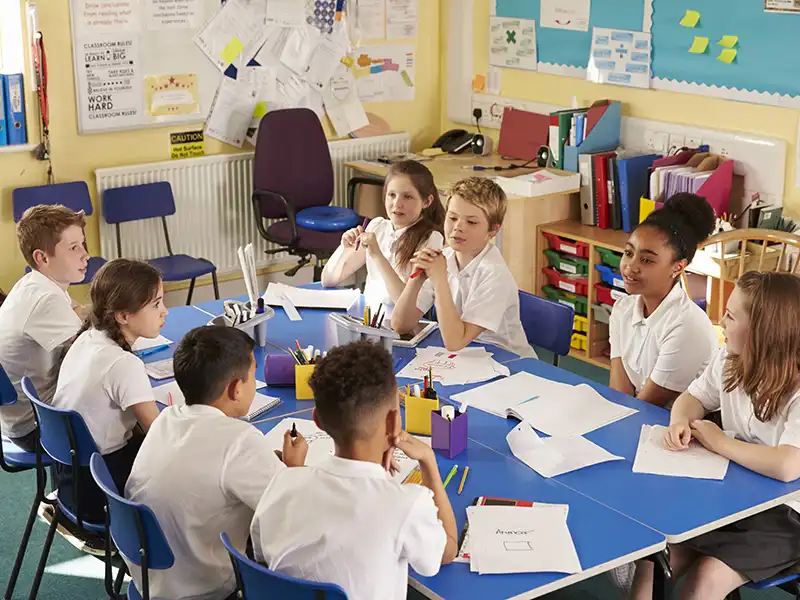
In Peer Support, participants are the younger students who join the small group sessions each week. The short sessions are run weekly for eight weeks, led by a pair of older students, called Peer Leaders.
In primary schools, the groups are typically made up of students in Kindergarten/Foundation through to Year 5. They’re led by Year 6 Peer Leaders.
In high schools, the groups are usually Year 7 students, led by Year 10 students.
Being a participant isn’t a passive role. Your child will be actively involved in discussions, activities, and skill-building exercises each week. It’s a structured program, and the content is highly relevant to what students are actually navigating at school and in life.
What will a typical session look like?
Sessions run for 30 or 40 minutes each week over eight weeks. Your child will be part of a small group led by a pair of trained Peer Leaders who have been prepared specifically to run these sessions.
Each session follows a structured plan built around the school’s chosen module. Activities might include:
- Group discussions on topics like friendship, resilience, or handling conflict
- Reflective exercises or journalling
- Collaborative challenges designed to build trust and connection
- Role-play scenarios to practise real-life social skills
The sessions are designed to be age-appropriate, educational and fun.
What topics will they cover?
The specific content depends on the module your school has chosen. Schools select from a range of evidence-based modules, including:
- Resilience: bouncing back from challenges and building a ‘have a go’ mindset
- Positive relationships: friendship skills, fair play, and supporting peers
- Anti-bullying: understanding what bullying is, how to respond, and how to create a safer school culture
- Optimism: recognising personal strengths and building a positive outlook
- Integrity: understanding your values and acting with good judgement.
Your child’s school may let you know which module they’re running. If not, it’s worth asking because knowing the theme will enable you to support your child at home.
What’s actually in it for my child?
The benefits of Peer Support aren’t abstract. Research into the program shows that students who participate report greater feelings of acceptance and inclusion. Many students also find that having a known, approachable older student to talk to — someone who isn’t a teacher — changes how they feel about school.
For students making the transition to high school in particular, Peer Support has been shown to help them settle in faster, feel more connected to the school community, and build relationships outside their immediate friend group.
The skills developed — empathy, listening, resilience, positive self-talk — are also ones they’ll use for life, not just for the next eight weeks.
What if my child is quiet or anxious about it?
It’s completely normal for some children to feel uncertain about joining a new group, particularly if they’re introverted or already navigating some social anxiety. The small group format is intentional — it’s less overwhelming than a classroom and more intimate than a playground.
Peer Leaders are trained to create an inclusive, welcoming environment. And because the sessions are structured, your child won’t be put on the spot — activities are designed so that everyone can participate at their own pace.
If your child comes home with concerns about specific sessions or interactions, it’s worth listening and, if needed, looping in their coordinating teacher, who oversees the program at the school.
How can I support this at home?
There’s no ‘homework’, but a little interest goes a long way. You could ask open questions about the program, such as “What did you talk about today?” or “Tell me about your Peer Support group?”
Your school should be sharing with you a summary of what’s being covered in each Peer Support session. This can help you initiate conversations about the topics being covered, like sharing ideas for how to manage stress and anxiety, or what you both think makes a good friend or leader. These can be really important conversations, which help your child build a toolkit for managing their own wellbeing and mental health. You may also reinforce the vocabulary. For example, if your child mentions new words like ‘resilience’ or ‘belonging’, use those words yourself in everyday conversation.
You don’t need to be an expert in the curriculum, just curious and encouraging. And, in a few years, your child may also have the opportunity to be a Peer Leader. This is the beauty of the Peer Support Program. Children go from taking part in the program, to stepping up into the leadership role.